






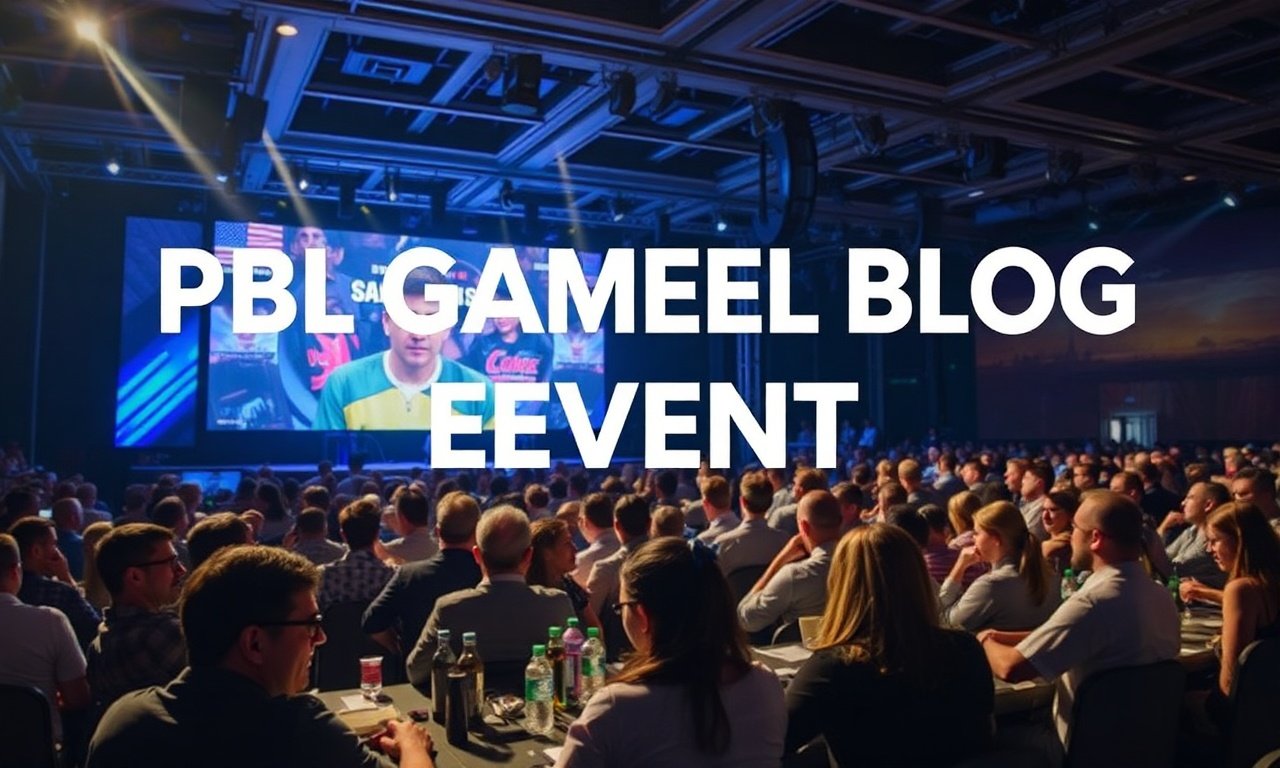
The landscape of learning and development is evolving rapidly, with organizations and institutions seeking more engaging, interactive, and effective methods to deliver training and education. One such innovation gaining traction is the hosted-event-pblgamevent, a dynamic fusion of gamification and problem-based learning delivered through structured, hosted events. This approach transforms traditional learning models by immersing participants in real-world challenges wrapped in game-like mechanics, fostering deeper understanding and long-term retention. See fixing-slow-mysql-queries – How to Fix Slow MySQL Queries: 10 Proven Optimization Techniqu for a related article on this site
What Is Hosted-Event-PBLGamevent?
A hosted-event-pblgamevent is a structured learning experience where participants engage in problem-based learning (PBL) scenarios within a gamified environment, facilitated and hosted by an organization or platform. Unlike passive lectures or static e-learning modules, this model emphasizes active participation, collaboration, and critical thinking. Learners are presented with authentic problems—ranging from business strategy simulations to environmental sustainability challenges—and must work in teams to analyze, strategize, and present solutions, all while earning points, badges, or other rewards typical of game design. For broader background, Hosted Event PBLGameVent: The Complete 2025 Guide explains the topic in more detail
The “hosted” aspect ensures that these events are professionally managed, often with dedicated facilitators, digital platforms, and real-time feedback systems. This structure supports scalability and consistency, making it ideal for corporate training, higher education, and professional development programs.
Key Components of a Successful Hosted-Event-PBLGamevent
Several core elements define an effective hosted-event-pblgamevent. First, the problem scenario must be relevant and complex enough to require collaborative problem-solving. Second, game mechanics such as leaderboards, timed challenges, and achievement unlocks are integrated to boost motivation. Third, facilitation is critical—trained hosts guide discussions, provide resources, and ensure equitable participation.
Additionally, technology plays a pivotal role. Digital platforms often support these events by enabling real-time collaboration, progress tracking, and data analytics. For instance, performance metrics can be used to identify knowledge gaps or assess team dynamics, offering valuable insights for future training iterations.
- Authentic, real-world problem scenarios
- Gamification elements (points, levels, rewards)
- Facilitated team-based collaboration
- Technology-enabled hosting and tracking
- Immediate feedback and reflection cycles
Benefits for Learners and Organizations
The advantages of adopting a hosted-event-pblgamevent model are multifaceted. For learners, the experience is more engaging and memorable than traditional methods. The combination of challenge and reward triggers intrinsic motivation, encouraging deeper cognitive processing. Participants also develop soft skills such as communication, leadership, and adaptability—competencies highly valued in modern workplaces.
From an organizational perspective, these events offer measurable outcomes. Companies can assess employee performance in realistic scenarios, identify high-potential individuals, and reinforce company values through tailored problem sets. Educational institutions, meanwhile, can bridge the gap between theory and practice, preparing students for real-world careers.
Moreover, the hosted nature of these events reduces logistical burdens on internal teams. External providers handle platform setup, technical support, and facilitation, allowing organizations to focus on content and objectives. This makes hosted-event-pblgamevent a scalable solution for both small teams and large enterprises.
Real-World Applications and Case Studies
Industries ranging from healthcare to technology are leveraging hosted-event-pblgamevents to drive innovation and skill development. For example, a pharmaceutical company might host an event where cross-functional teams design a go-to-market strategy for a new drug, incorporating regulatory constraints and patient needs. Similarly, a university might use the format to simulate urban planning challenges, requiring students to balance economic, environmental, and social factors.
One notable implementation can be explored in the Hosted Event PBLGameVent: The Complete 2025 Guide, which details best practices and success stories from global adopters. These case studies highlight improved engagement rates, higher completion percentages, and stronger knowledge retention compared to conventional training methods.
Even in technical domains, such as database management, the principles of problem-based learning can be enhanced through gamified events. For instance, teams might compete to optimize a slow-performing database, applying techniques similar to those discussed in resources like fixing-slow-mysql-queries – How to Fix Slow MySQL Queries: 10 Proven Optimization Techniques, but within a collaborative, time-bound challenge format.
Getting Started with Hosted-Event-PBLGamevent
Implementing a hosted-event-pblgamevent begins with defining clear learning objectives and selecting a relevant problem domain. Organizations should partner with experienced providers who offer end-to-end support, from scenario design to post-event analysis. Pilot programs are recommended to test engagement levels and refine the format before full-scale rollout.
It’s also essential to align the event with broader training goals. Whether the aim is leadership development, technical upskilling, or cultural transformation, the problem scenarios and game mechanics should reflect those priorities. Continuous feedback from participants helps improve future iterations, ensuring long-term effectiveness.
As the demand for experiential learning grows, the hosted-event-pblgamevent model stands out as a powerful tool for fostering innovation, collaboration, and real-world readiness. By blending the engagement of games with the depth of problem-based learning, it offers a compelling alternative to outdated training paradigms.